
Serbia's insurance sector has shown notable growth in 2026, reaching €3.88 billion in assets.
- Total insurance premiums rose 6.9% year-on-year to €889 million.
- Voluntary health insurance saw the strongest growth at 11.5%.
- Property insurance premiums grew only 0.9%, indicating uneven demand.
Serbia’s insurance sector grew to €3.88 billion in assets in the first half of 2026, according to the National Bank of Serbia (NBS), but the pace of growth was uneven. Health-related products expanded quickly, while property insurance advanced only marginally, raising questions about how well industrial assets are covered as the country continues to invest in factories, logistics and energy projects.
Total insurance premiums rose 6.9% year on year to €889 million, while industry assets increased 3.4%. The strongest gains were recorded in voluntary health insurance, which rose 11.5%, accident insurance, up 23.7%, and comprehensive motor insurance, which increased 12.9%.
By contrast, property insurance premiums grew only 0.9%. That gap suggests that demand is rising faster for products linked to healthcare, employee benefits and mobility than for cover protecting buildings, machinery and other physical assets.
Property insurance loses ground
Property insurance accounted for 19.2% of total premiums, down from 20.4% a year earlier, or about €171 million in premium income. Voluntary health insurance increased its share from 12.2% to 12.8%, generating around €114 million.
Motor vehicle liability remained the biggest line of business, with 26.7% of premiums, while life insurance represented 17%. Taken together, the figures show a market that is expanding, but not evenly across segments.
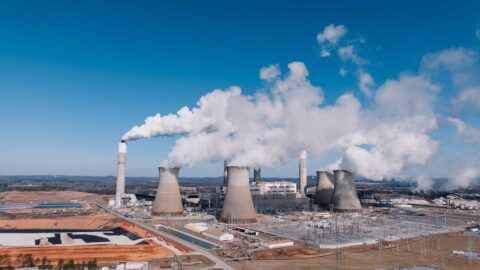
For industrial companies, the difference matters. Property insurance is a key tool for managing fire, flood, machinery damage and other events that can stop production. In sectors such as manufacturing, renewable energy and warehousing, underinsurance can leave businesses exposed to replacement costs and business interruption losses.
Premium growth alone does not prove that coverage is insufficient, but it does suggest that policy values, deductibles and exclusions deserve closer attention, especially as inflation and currency movements affect the cost of equipment and reconstruction.
Banks and investors face residual risk
The data are also relevant for banks financing construction, industrial expansion and infrastructure. Lenders usually check whether collateral is insured, but standard property cover does not always protect against prolonged shutdowns or lost income after a major incident.
A factory may have adequate building insurance and still suffer large revenue losses if machinery breaks down or electricity supply is interrupted. Renewable energy projects face similar issues, including turbine failures, damage to photovoltaic equipment, construction delays and grid-related outages.
That means banks and investors need to look beyond the existence of a policy and examine coverage limits, exclusions, reinsurance arrangements and the insurer’s creditworthiness. In practice, insurance should be assessed alongside debt-service requirements and the full replacement value of assets.
Foreign insurers dominate a concentrated market
At the end of June, Serbia’s insurance market included 20 insurance and reinsurance companies, of which 15 were under majority foreign ownership. The five largest players, Dunav, Generali, DDOR, Wiener Städtische and Triglav, controlled 73.2% of total premiums.
Dunav held the largest share at 25.2%, followed by Generali with 19.1%, DDOR with 10.5%, Wiener with 10.3% and Triglav with 8.1%. Foreign-controlled insurers accounted for 68.2% of industry assets and 83.6% of life insurance premiums.
The market is also concentrated in faster-growing segments. Three insurers controlled 61.8% of voluntary health insurance premiums, showing that competition is strongest where demand is rising fastest.
Industrial investment may create new demand
Serbia’s ongoing investment in manufacturing, renewable energy, logistics and commercial real estate may eventually support wider demand for specialised insurance products. Industrial plants, warehouses, wind farms, solar parks and battery storage facilities all require cover tailored to construction, commissioning and operating risks.
That creates room for engineering insurance, industrial property policies and business-interruption cover, although more complex projects may require substantial international reinsurance support. For insurers, the main opportunity is to move beyond basic retail products and build portfolios linked to corporate investment.
The latest NBS figures show that Serbia has a financially significant insurance industry, but one where growth is still stronger in personal cover than in protection of industrial assets. For investors and lenders, that makes insurance quality an increasingly important part of project risk management. You can also follow other market developments in our latest news section.
Frequently asked questions
What is the total value of Serbia's insurance assets in 2026?
Serbia's insurance assets reached €3.88 billion in the first half of 2026.
Which insurance products are experiencing the most growth?
Voluntary health insurance, accident insurance, and comprehensive motor insurance are seeing the highest growth rates.
How is property insurance performing in Serbia?
Property insurance premiums grew only 0.9%, indicating a decline in its market share.
What challenges do industrial companies face regarding insurance?
Underinsurance in property coverage can expose industrial companies to significant risks, including production stoppages.
What role do foreign insurers play in Serbia's market?
Foreign insurers dominate Serbia's insurance market, controlling a significant share of both assets and premiums.