

Professor Ismail Musabegović advocates for a minimum of 5% economic growth in Serbia to ensure sustainable development.
- Serbia's economy is projected to grow by 3.1% this year.
- Musabegović calls for increased infrastructure investment to 25% of GDP.
- Youth unemployment in Serbia stands at an alarming 22%.
Serbia's economy is expected to grow by 3.1 percent this year and 3.7 percent next year, according to the latest World Bank forecast. Beograd Banking Academy professor Ismail Musabegović said those rates are solid by comparison with more developed European economies, but still not enough for a stronger development push.
He said the new government should aim for at least 5 percent annual growth and keep it at that level for several years if Serbia wants what he described as a real economic jump.
Industrial base and exports
Musabegović said the restart of production in the oil sector helped support growth this year. He described the Pančevo refinery as an important factor for gross domestic product, but one that stabilizes the economy rather than drives long-term development.
He also warned that it is risky when one company, such as Stellantis, becomes the main export engine. In his view, Serbia needs a larger number of exporters among small and medium-sized businesses.
The professor used a Chinese proverb to make the point that a single tree is easier to break than a bundle of many thin branches tied together.
What should happen with investment
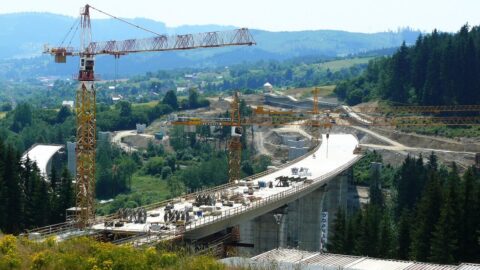
Musabegović said at least 25 percent of gross domestic product should go to infrastructure projects and investment. He added that Serbia is currently at about 22 percent.
According to his estimate, the state accounts for 7 to 8 percent of GDP, direct investment for 4 percent, while the remaining 12 to 13 percent comes from small and medium-sized companies. He said those firms need more support.
He expects ongoing infrastructure projects to continue, although some review is likely. In his view, the main schemes will remain in place.
For foreign readers following Serbia's economy, this is relevant because large public works, industrial output and export concentration all affect growth prospects, business conditions and employment. Related coverage can be found in our latest news section.
Industry, agriculture and jobs
The professor argued that services alone cannot sustain long-term development without manufacturing. He said Serbia needs what he called a strong industrial base that creates durable value.
He sees agriculture and food processing as the country's biggest opportunities. To illustrate the gap, he pointed out that the Netherlands, which is about the size of Vojvodina, exports food products worth 135 billion, while Serbia does not exceed five billion.
Musabegović also called the unemployment rate among young people, 22 percent, an alarming figure. He recommended that the new government support small and medium-sized enterprises, reform the judiciary and public administration, and align education with the needs of the economy, taking German-style dual education courses as an example.
Frequently asked questions
What is the current economic growth forecast for Serbia?
Serbia's economy is expected to grow by 3.1% this year and 3.7% next year according to the World Bank.
What does Professor Musabegović suggest for Serbia's growth?
He suggests that Serbia should aim for at least 5% annual growth to achieve a real economic jump.
Why is the industrial base important for Serbia?
Musabegović argues that a strong industrial base is essential for long-term sustainable development and job creation.
What is the current state of youth unemployment in Serbia?
The unemployment rate among young people in Serbia is currently 22%, which is considered alarming.