
This article examines the balancing risks faced by Serbia's wind sector following the establishment of the Čibuk complex.
- Serbia's wind sector has successfully attracted investment and built capacity.
- Forecasting accuracy is crucial for managing electricity output and financial performance.
- Balancing costs and contractual agreements significantly impact project economics.
Serbia has already shown that large wind projects can be financed, built and connected to the grid. The next issue is not whether turbines can be installed, but how their output is managed once they start trading on the electricity market.
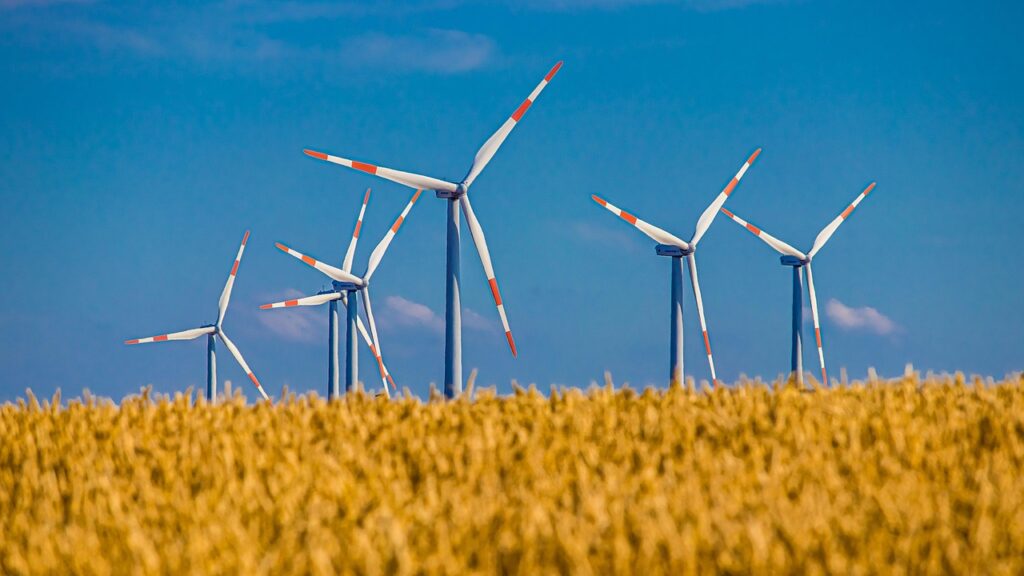
The clearest example is Čibuk 2, which was inaugurated in September 2026. Together with the existing 158 MW Čibuk 1, it created a 312 MW wind complex in South Banat, backed by more than €500 million in investment.
That scale matters because Serbia’s renewable auctions have already brought a large volume of new capacity into the pipeline. According to the European Bank for Reconstruction and Development, the first two competitive auctions assigned nearly 1,300 MW of wind and solar projects, including the Pupin and Čibuk 2 wind farms.
Forecasting is becoming a commercial issue
In the early phase of Serbia’s wind industry, the main obstacles were permits, financing and grid connection. For the next wave of projects, market exposure is becoming more important.
Wind generation has to be forecast before delivery, and the balancing responsible party is then responsible for the difference between the nominated and the actual electricity position under the market rules. That means inaccurate forecasts can create real costs, even if a project produces the expected annual volume of electricity.
EMS, Serbia’s electricity transmission system operator, reports an average upward balancing-energy price used for specified risk and settlement calculations of €154.174/MWh for 2026, compared with €136.523/MWh in 2025. The figure is not the automatic cost for every wind farm, but it shows how expensive forecasting errors can become.
A project may still meet its annual production target and yet generate weaker cash flow if its hourly output repeatedly differs from the schedule that was submitted to the market. For lenders and investors, this makes forecasting a key commercial issue, not just a technical one.
Who carries the imbalance risk
The article points to several contract-level questions that can materially change the economics of a power purchase agreement, or PPA. These include who submits nominations, who owns the forecasting model, who can trade intraday, who pays when measured output differs from the scheduled amount, and how balancing costs are split between the generator and the trader.
Transparency becomes especially important when a third-party trader or balancing responsible party manages settlement. A wind farm owner should be able to trace the process from the forecast and nomination to the measured output and final balancing charges. Without that, imbalance costs can be difficult to audit.
There is also a portfolio effect. Combining several renewable assets can reduce forecast error if deviations cancel each other out, but that only works when the projects are not too closely correlated. Wind farms in the same weather zone can miss forecasts in the same direction at the same time.
That is relevant for Serbia, where a large share of new capacity is concentrated in Vojvodina. It means balancing responsibility needs to be assessed project by project, not only at the level of a broader renewable portfolio.
From balancing costs to flexibility
The development of Serbia’s market may also create new opportunities. EMS already procures ancillary services and runs balancing arrangements that include frequency-related reserves and balancing activation. For wind projects paired with storage, flexible portfolios or capable aggregators, the long-term opportunity is to help provide the flexibility the system needs.
That would require technical qualification, control systems and clear market rules. It would also require financiers to look more closely at balancing exposure when assessing projects.
Instead of treating balancing costs as a minor operating assumption, lenders would need to examine forecast-error history, trading arrangements, the quality of the forecasting provider and the contractual allocation of imbalance risk. They would also need to test periods when several adverse factors occur at once, such as low wind output combined with high upward balancing prices.
Serbia has already proven that wind can attract international investors and non-recourse financing. The next advantage will depend on how efficiently those assets operate inside a more liquid and more volatile electricity market.
In other words, the challenge is no longer simply to make turbines produce power. It is to turn variable output into predictable cash flow.
Frequently asked questions
What is the Čibuk complex?
The Čibuk complex consists of Čibuk 1 and Čibuk 2 wind farms, totaling 312 MW of capacity in Serbia.
Why is forecasting important in the wind sector?
Accurate forecasting is essential to manage the difference between scheduled and actual electricity output, impacting financial returns.
What are the main risks associated with wind energy in Serbia?
The primary risks include balancing costs, forecasting errors, and contractual obligations in power purchase agreements.
How can combining renewable assets help in forecasting?
Combining assets can reduce forecast errors if deviations from expected output cancel each other out.
What role does EMS play in Serbia's electricity market?
EMS is responsible for managing the electricity transmission system and balancing arrangements, impacting the operational efficiency of wind projects.