
This guide presents seven Belgrade interiors open to visitors, each with its own access rules, from guided tours to regular museum hours.
- The Palace of Serbia offers organized tours that require registration through the Tourist Organisation of Belgrade, with no confirmed regular opening hours.
- The National Bank of Serbia's exhibition is free and open on weekdays, but ceremonial interiors require a separate guided visit.
- The House of the National Assembly requires advance booking, arranged by email at edukacija@parlament.rs.
- The Royal Compound tour in Dedinje lasts about two hours, includes outdoor walking, and does not allow photography inside.
- Plan a visit to no more than two interiors per day and check hours, booking rules and accessibility before you go.
Several of Belgrade's most notable interiors can be seen by visitors, though access varies. Some places follow regular museum hours, while others require advance booking or open only for organized tours and special programs. This guide covers seven of them, with the practical details a visitor needs before setting out.
1. Palace of Serbia
The Palace of Serbia is widely known from photographs of official meetings, but its ceremonial interiors are far less familiar. Architecture, artworks, furniture and materials were combined to create representative spaces for the state. The building holds a significant collection of fine and applied art, which is cared for by the Administration for Joint Services of Republic Bodies.
If you get the chance to visit, look at each room as a whole: how the floors, wall surfaces, lighting and furniture work together.
Planning your visit: The palace has no confirmed regular museum-style opening hours. Organized tours were part of European Heritage Days in October 2026, with mandatory registration through the Tourist Organisation of Belgrade. No November tour date had been confirmed at the time the source guide was prepared, so check availability first.
2. National Bank of Serbia
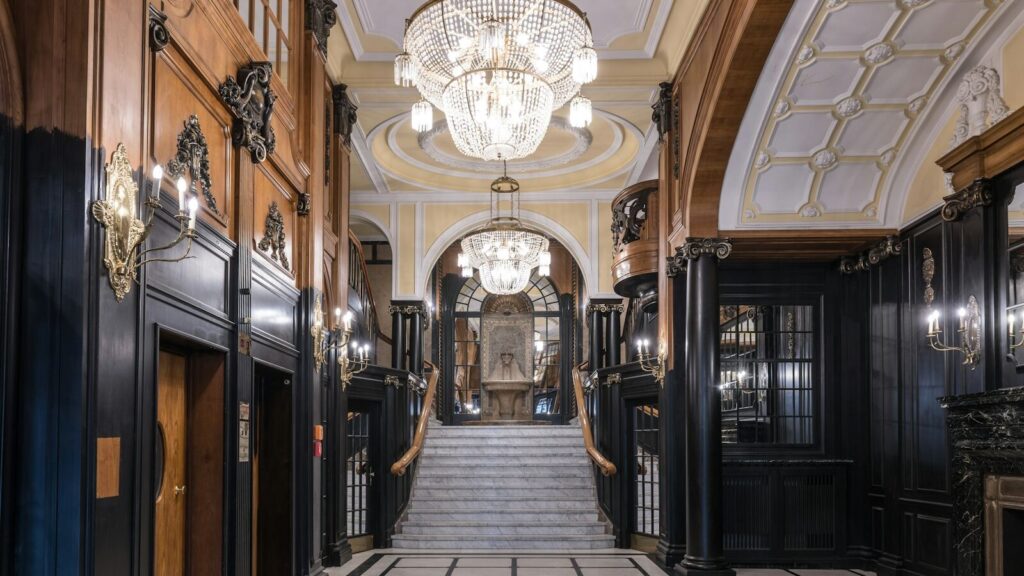
The National Bank of Serbia is at 12 Kralja Petra Street. Behind its formal facade are a sweeping staircase, painted vaults, colored marble and decorative arches. Architect Konstantin Jovanović designed both the building and its interiors. The white marble staircase is overlooked by Serbia, a bronze bust by sculptor Đorđe Jovanović.
A visit can be combined with an exhibition on the history of money in Serbia. Access to the exhibition is not the same as a tour of the ceremonial interiors, so ask about special guided visits if you want to see the grand hall and other representative spaces.
Planning your visit: The exhibition space is open on weekdays from 10 am to 4 pm, with free admission. Individual visitors do not need to book, but groups must reserve in advance. Enquiries: izlozba@nbs.rs.
3. Princess Ljubica's Residence
Princess Ljubica's Residence is at 8 Kneza Sime Markovića Street. Its permanent exhibition, Interiors of 19th-Century Belgrade Homes, moves from Ottoman-style rooms to salons shaped by Central and Western European influences. Furniture, paintings and decorative objects show how the ruling dynasty and prominent Belgrade families lived.
The divanhana, a room meant for gathering, is worth some extra time. Its position beside the windows and its seating arrangement point to a home life built around conversation, coffee and time together. Comparing it with the European-style salons shows how habits, tastes and ways of receiving guests changed.
Note that this is a museum display assembled from objects of different origins, not an untouched home with every item in its original place.
Planning your visit: Check opening hours and current special programs, which may require a separate reservation.
4. House of the National Assembly
According to the Tourist Organisation of Belgrade's tour description, visitors see the entrance vestibule, the central hall, the small and large assembly chambers, the library and Prince Paul's Salon. The tour also includes works by artists such as Sava Šumanović, Petar Lubarda and Nadežda Petrović.
A guided visit helps connect the rooms, their functions and the art displayed in them. The library and the salon have a noticeably different atmosphere from the parliamentary sessions usually seen on television.
Planning your visit: Advance booking is required. The National Assembly lists both group and individual visits, arranged by emailing edukacija@parlament.rs. Confirm the date and entry requirements beforehand.
5. The Royal Palace and the White Palace
An organized visit to the Royal Compound in Dedinje, a residential district of Belgrade, introduces the Royal Palace, the White Palace (Beli Dvor) and the Royal Chapel of Saint Andrew the First-Called. Comparing the palaces shows how the interiors combine ceremonial and residential functions, and how artworks are arranged in each.
According to the official visitor information, the tour lasts about two hours and includes walking through the grounds, so part of it takes place outdoors.
Planning your visit: Tours are organized through the Tourist Organisation of Belgrade on agreed dates. The official website lists a season from April to November, and a specific November date must be confirmed. Photography inside the interiors is not permitted.
6. House of Jevrem Grujić
The House of Jevrem Grujić stands at 17 Svetogorska Street, next to the Atelje 212 theater. It offers a more intimate view of old Belgrade through family portraits, salon furniture and objects handed down over generations. The Grujić family's story brings together diplomacy, politics and art.
Details worth noticing include ornate picture frames, carved armchairs and porcelain. The art collection and family possessions show the tastes and connections of the former residents.
Planning your visit: Check current exhibitions and tour times before arriving. Visits outside the museum's regular programs must be arranged in advance.
7. Paja Jovanović Museum
The Paja Jovanović Museum is at 21 Kralja Milana Street, inside a residential building. The painter wanted to leave Belgrade objects from his work and studio that were worth preserving. The museum opened in 1970 and presents his legacy through artworks and personal belongings.
The salon apartment that houses the museum was not the painter's own home, so the value of the visit lies in the legacy and how it is presented.
Planning your visit: Check opening hours and entry instructions before arriving.
Planning your own interior tour
The guide advises against trying to see all seven places in one day. Choose two interiors and leave time for a walk and a break between them. The Royal Compound is best treated as a separate outing.
For the Palace of Serbia and the House of the National Assembly, start with a confirmed tour date and build the rest of the day around it.
- Check opening hours, reservation rules and photography restrictions before you go.
- Check accessibility. For smaller museums in houses and apartments, ask about stairs and entrances if you travel with a pushchair or need step-free access.
For current dates and booking conditions, contact the institutions directly at the addresses above or use the Tourist Organisation of Belgrade's tour information.
Frequently asked questions
Do I need to book a visit to the Palace of Serbia?
Yes, organized tours require mandatory registration through the Tourist Organisation of Belgrade. No November tour date had been confirmed when the guide was prepared, so check availability first.
Is the National Bank of Serbia exhibition free to visit?
Yes, the exhibition on the history of money in Serbia is free and open on weekdays from 10 am to 4 pm. Individual visitors do not need to book, but groups must reserve in advance.
How do I arrange a visit to the House of the National Assembly?
Advance booking is required for both group and individual visits. You can arrange one by emailing edukacija@parlament.rs and should confirm the date and entry requirements beforehand.
Can I take photos during the Royal Compound tour in Dedinje?
No, photography inside the interiors is not permitted. The tour lasts about two hours and includes walking through the grounds outdoors.
Is Paja Jovanović Museum a palace or a painter's former home?
The museum is housed in a salon apartment at 21 Kralja Milana Street that was not the painter's own home. It opened in 1970 and presents his artworks, studio objects and personal belongings.