
The European Commission expects Serbia's economic growth to slow after EXPO 2027 as temporary construction and exhibition-related investment winds down.
- GDP growth is forecast at 3.3% in 2026 and 3.8% in 2027, then easing to 2.9% in 2028.
- Current growth relies on wages, household borrowing and EXPO-linked construction, which may not be sustained.
- Average inflation is projected at 3.3% in 2026 and 4.2% in 2027, with a 3.5% of GDP budget deficit in 2026.
- Foreign direct investment has weakened since 2025, raising concerns about a gap after public works end.
- Future growth will depend more on private investment, productivity and higher-value exports than on public construction.
Serbia's economic growth is expected to slow after 2027 as investment linked to EXPO 2027 in Belgrade fades, according to the latest forecast of the European Commission. The Commission projects real gross domestic product (GDP) growth of 3.3% in 2026 and 3.8% in 2027, followed by a decline to 2.9% in 2028.
Demand supported by wages, credit and construction
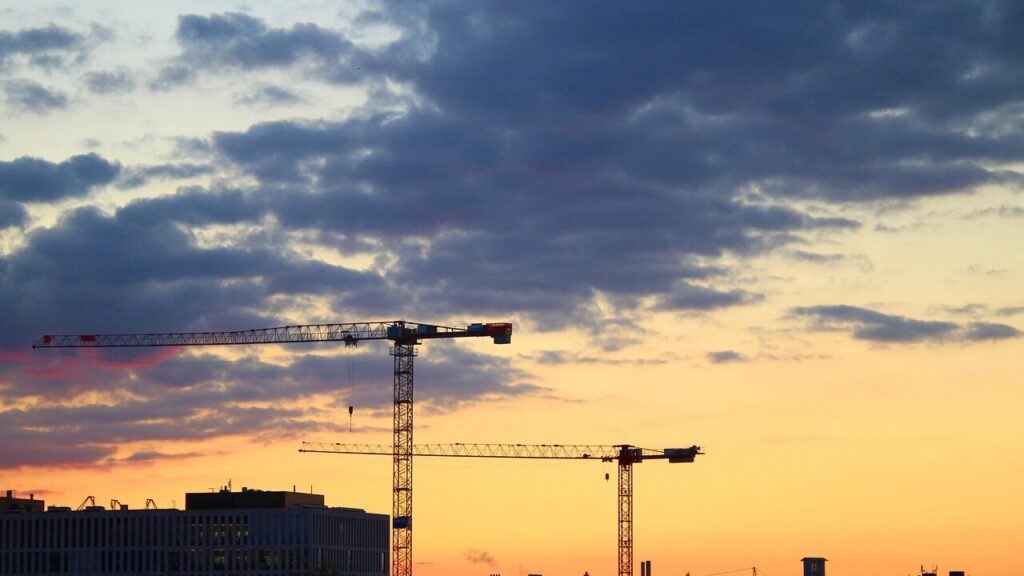
The forecast describes an economy that currently relies on wage growth, household borrowing and construction spending connected to the international exhibition. These factors support short-term demand for retailers, contractors, transport firms and service companies.
However, they do not ensure that the investment cycle will continue once the exhibition-related works are completed.
Inflation and budget deficit
The Commission expects average inflation of 3.3% in 2026 and 4.2% in 2027. For 2026 it projects a general-government deficit of 3.5% of GDP.
Faster wage growth can support consumption. Wage increases that regularly outpace productivity gains, however, raise unit labor costs for exporters. This is relevant for a manufacturing-based economy that competes for orders in Europe and for internationally mobile investment.
Foreign investment and the risk of a gap
The source article also points to weaker foreign direct investment (FDI) since 2025. If private investment does not replace temporary public construction spending, the slowdown could be felt in engineering services, building materials and among domestic suppliers.
The concern is not only slower headline growth. It is also that the economy's ability to generate higher-value exports and lasting productivity gains could weaken.
What the post-EXPO period will test
The key question after the EXPO spending peak is whether manufacturers, technology companies and logistics operators will invest enough to broaden the country's productive base. The Commission's projections put more weight on the quality and efficiency of investment than on the pace of spending alone.
For investors and companies operating in Serbia, the figures indicate that growth beyond 2027 will depend more on private-sector investment and productivity than on public construction. For related political and economic developments, see the latest news on Serbia News.
Frequently asked questions
Why is the European Commission forecasting slower GDP growth for Serbia after 2027?
The Commission expects growth to slow from 3.8% in 2027 to 2.9% in 2028 as investment linked to EXPO 2027 in Belgrade fades. Current growth relies heavily on temporary construction spending.
What is the Commission's inflation forecast for Serbia?
The Commission projects average inflation of 3.3% in 2026 and 4.2% in 2027. Faster wage growth that outpaces productivity could also raise unit labor costs for exporters.
Why does foreign direct investment matter for Serbia's post-EXPO outlook?
FDI has weakened since 2025, and if private investment does not replace temporary public construction spending, the slowdown could hit engineering services, building materials and domestic suppliers.
What will determine Serbia's economic growth beyond 2027?
According to the forecast, growth will depend more on private-sector investment, productivity and the quality of investment than on the pace of public construction spending.