
EU imports of Serbian iron, steel and aluminium exceeded €1 billion in 2025, but customs data alone cannot show where the metal ends up or who bears CBAM costs.
- Iron and steel imports totaled about €567 million, and aluminium about €448 million.
- Poland, Czechia and Hungary led EU imports of Serbian iron and steel, while Germany, Slovenia and France led aluminium imports.
- Processing steps and multiple actors between importer and final manufacturer obscure the final destination of the metal.
- The party legally responsible for CBAM certificates is not necessarily the one who ultimately pays the cost.
- A next-stage analysis would need traceable documents to link specific processors and manufacturers to Serbian metal.
European Union imports of Serbian metals exceeded €1 billion in 2025. Iron and steel accounted for about €567 million and aluminium for about €448 million, according to European customs data cited in the source. The figures show the scale of trade with the bloc, but they do not show which factories used the metal or which companies ultimately bear costs under the EU Carbon Border Adjustment Mechanism (CBAM).
CBAM is the EU system that puts a carbon-related cost on certain imported goods, including steel and aluminium. Importers must obtain certificates reflecting the emissions embedded in those products.
Main EU markets by product
Poland, Czechia and Hungary were the leading EU markets for Serbian iron and steel (customs heading HS72). Germany, Slovenia and France led direct imports of Serbian aluminium and aluminium articles (HS76).
These country and product totals can help identify trade routes that need screening under the mechanism. They do not show where the material was finally used. A shipment entering the EU through Poland, for example, could end up in a German vehicle, a Czech machine tool or a Hungarian industrial building.
Processing obscures final destinations
The supply chain typically involves four separate actors: a Serbian producer, an EU importer or indirect customs representative, a European processor and a final manufacturer. The importer clears the goods and takes on the legal obligations under CBAM. The processor may roll, cut, press, extrude or fabricate the metal before a manufacturer uses it in a vehicle, machine, building or package.
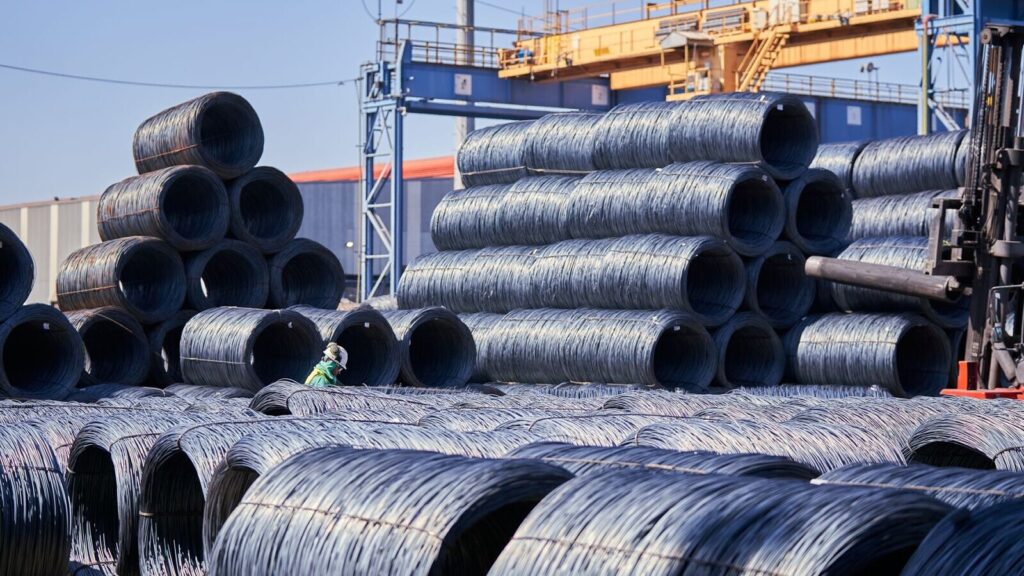
One corporate group can fill several of these roles, but each link has to be documented separately. In flat steel, the immediate EU buyer may be a service centre that holds inventory and carries out processing. A coil can then be slit, cold-reduced, galvanised and stamped before it reaches a component maker or vehicle plant.
Serbian rolled aluminium sheet can likewise be finished further or used in packaging and fabrication in Europe. Customs data record the country of entry and the product category, not each processing step or the final customer. Claims that Serbian metal directly supplies specific European carmakers therefore need traceable transactions, not inferences from trade totals.
Impol Seval, a rolled-aluminium producer based in Sevojno, reported export revenue of roughly €89.7 million for the first half of 2025. Its public report named Germany, Italy and France as important markets. The disclosure shows the company's export focus, but it does not name end users of individual sheets or strips, nor does it establish supplies to a particular automotive or aerospace manufacturer.
Who pays CBAM costs depends on contracts
The party legally responsible for CBAM certificates is not necessarily the one that ultimately pays. An importer could pass the expense to a distributor, which could then raise prices for a fabricator or final manufacturer. A large industrial buyer could instead require the Serbian supplier to absorb the cost through a lower ex-works price.
Identifying the ultimate purchaser would therefore not, on its own, show who bears the cost. A reliable register of companies benefiting from Serbian metal exports would need more than a spreadsheet of customs codes. Where lawfully accessible, it could draw on importer EORI numbers and legal-name records, purchase orders, delivery terms, distribution agreements, factory receiving records and customer acceptance documents.
Tracking would also require preserving the identity of the material and its originating installation through processing. Business links should be classed as confirmed by a primary document, disclosed through a corporate relationship, or only a plausible downstream use, rather than treated as equal evidence.
What comes next
The source suggests a next-stage analysis could start with product-specific flows into Poland, Czechia, Hungary, Germany and Slovenia, and then trace named processors only where independent records allow attribution. For now, the customs figures establish the size and routes of trade, but not the final factories or how CBAM costs are split among suppliers, importers and manufacturers.
More business coverage is available in the latest news section.
Frequently asked questions
How much Serbian iron, steel and aluminium did the EU import in 2025?
EU imports of Serbian metals exceeded €1 billion in 2025, with iron and steel accounting for about €567 million and aluminium for about €448 million, according to European customs data.
Which EU countries were the main markets for Serbian metal?
Poland, Czechia and Hungary were the leading EU markets for Serbian iron and steel, while Germany, Slovenia and France led imports of Serbian aluminium and aluminium articles.
What is the EU Carbon Border Adjustment Mechanism (CBAM)?
CBAM is an EU system that places a carbon-related cost on certain imported goods, including steel and aluminium. Importers must obtain certificates reflecting the emissions embedded in those products.
Can customs data show which companies use Serbian metal?
No. Customs data record the country of entry and product category but not the processing steps, factories or final customers. Confirming specific business links requires traceable primary documents.